Save time, effort, travel, and avoid long downtime for your equipment.
Hier klicken, um Kontakt aufzunehmen

We bring our “mobile tire workshop” to you to repair or replace damaged or faulty tires.


There is a wide range on offer for commercial vehicles and tyres must be adapted to different purposes, routes and types of vehicle.
Choosing the right tyre makes a significant contribution to road safety.
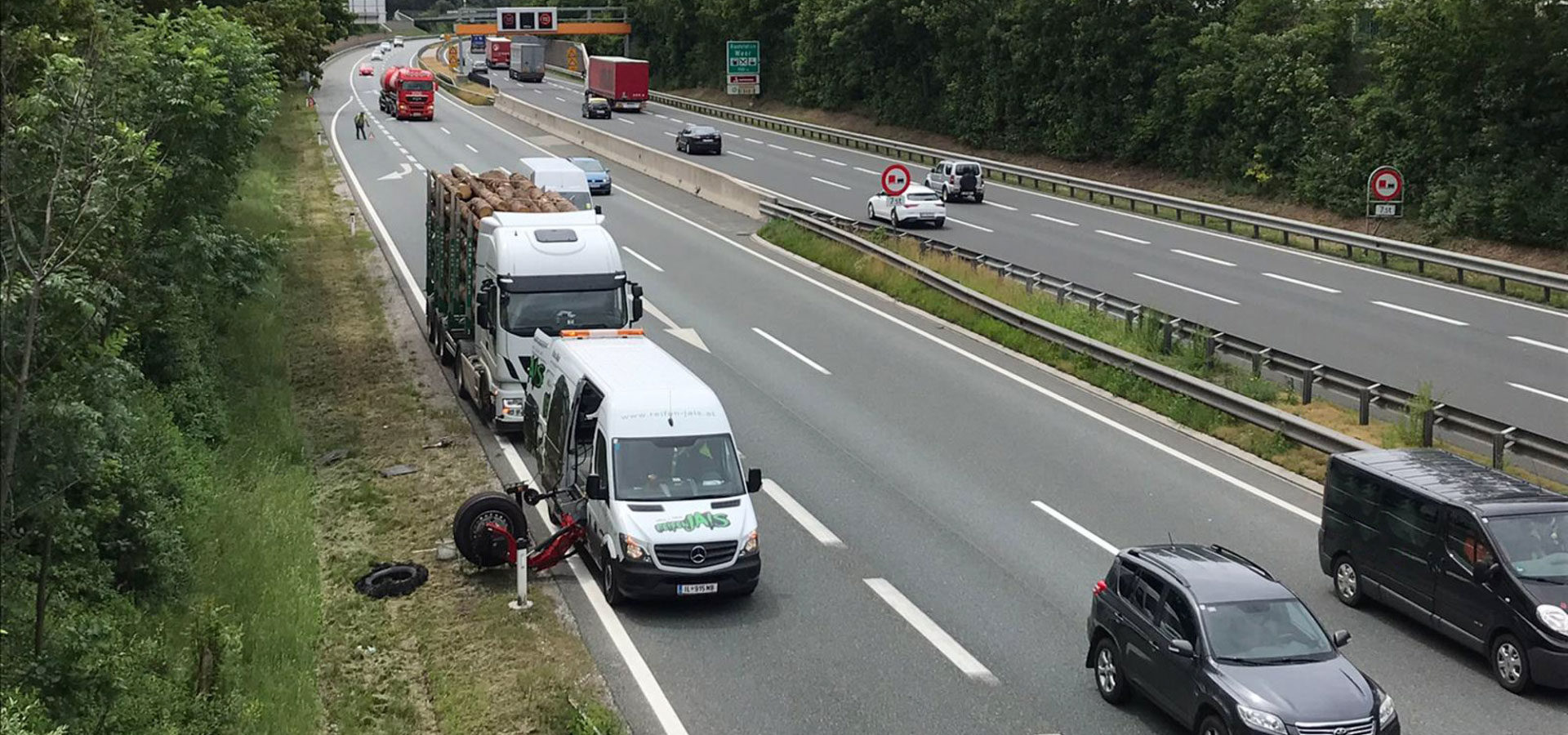
Save time, effort, travel, and avoid long downtime for your equipment.
Hier klicken, um Kontakt aufzunehmen
We bring our “mobile tire workshop” to you to repair or replace damaged or faulty tires.
A replacement isn’t always necessary for truck tires. Our trained specialists can expertly repair damage to the sidewall, shoulder, bead, and tread through vulcanization.
This provides a cost-effective and environmentally friendly alternative to buying a new tire.
Hot repairs are carried out directly at our workshop, and on request, we can provide a suitable loan tire while yours is being repaired.
Even truck tires with nail holes or small punctures can often be professionally repaired.
With cold repair, the tire is not vulcanized; instead, it is permanently sealed from the inside using special materials and adhesives.
The advantage: your vehicle is back on the road in no time.
We carry out cold repairs either conveniently on-site at your location or in our workshop.
Feel free to contact us to schedule an appointment.
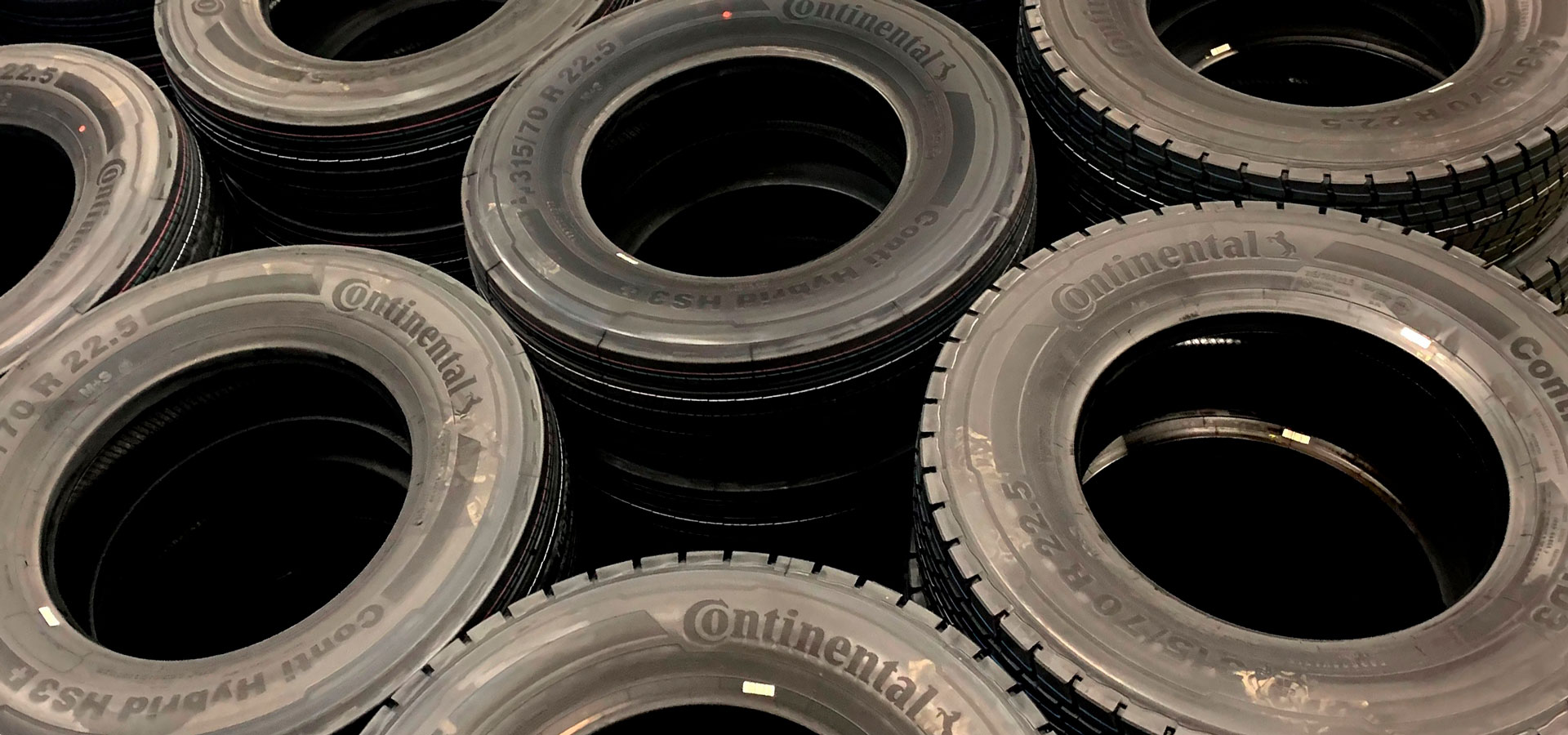
We have tyres and rims for almost any purpose in stock for you, which we would also be happy to fit for you on-site, where you are if you wish.

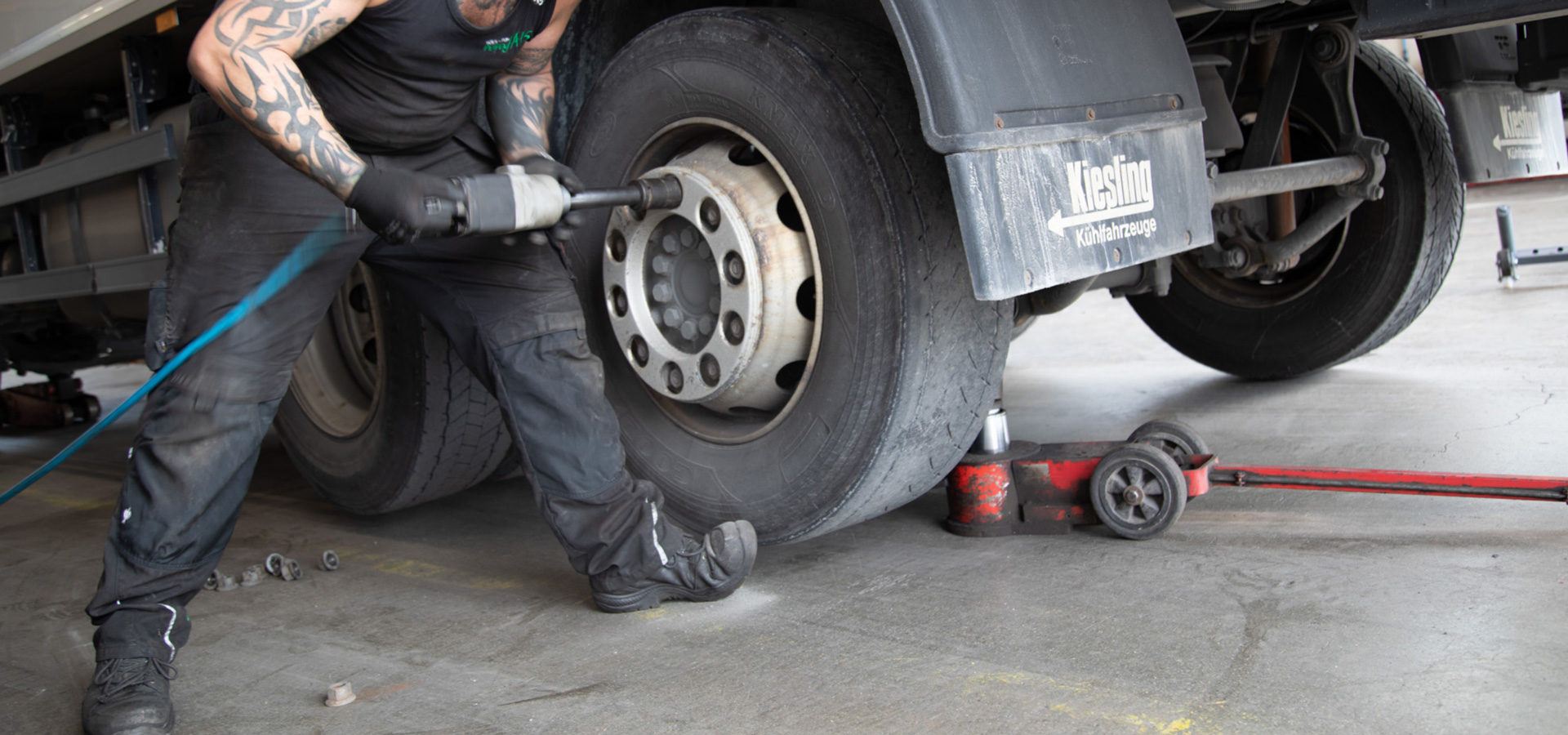
Tyre pressure has a significant influence on properties in relation to fuel consumption, driving characteristics and service life.
Regular checks are absolutely necessary, as a tyre pressure decreases over time due to a range of factors. This must always correspond to what the tyres are used for and the loads they are put under.
Minimum tread depth according to
the Austrian Road Traffic Act (StVO):
Summer tyres 2 mm
Winter tyres with M + S markings 5 mm for radial tyres or 6 mm for cross-ply tyres on at least one drive shaft.
Winter period for HGVs 01/11 – 15/04 / buses 01/11 –15/03
The Association of Tyre Specialists in Austria (VRÖ) recommends to stop using summer tyres with treads that are less than 3 mm and winter tyres on HGVs and buses with treads that are less than 8 mm, given that handling is significantly reduced in wintry conditions.
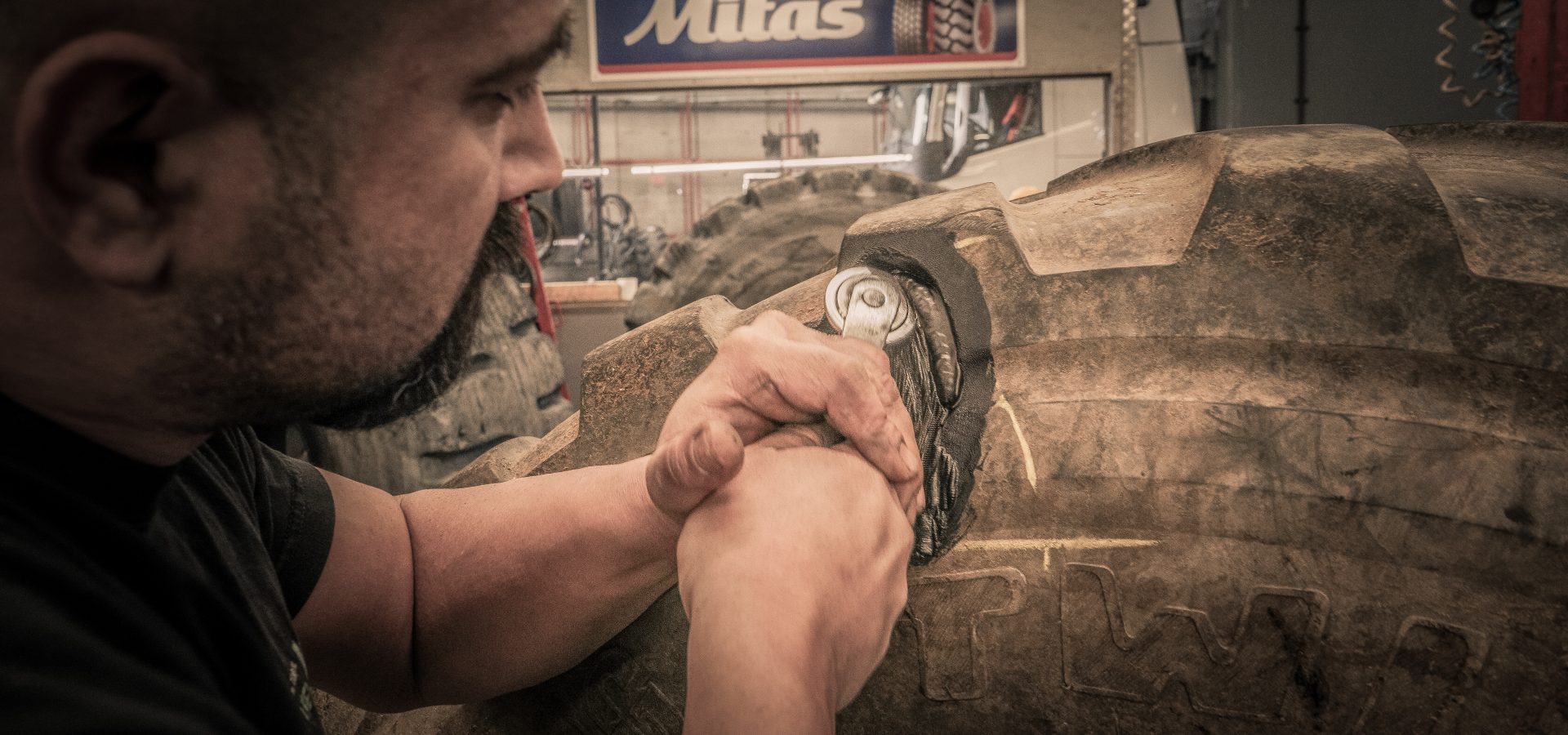
Tyres that are marked “regroovable”, have been equipped with thicker rubber to allow us to recut them. We expertly process these tyres using a special recutting tool. Depending on the type of tyre, this process can improve the mileage by up to 30%. In addition the rolling resistance is up to 5% lower. In this way, fuel consumption is also reduced.
Recut tyres can be used on vehicles with a total weight of over 3.5 t. This does not include the steering axles of HGVs, buses and hazardous goods transporters.
With us, you don’t always have to get a new tyre straight away. Thanks to our trained specialist staff, we can also repair more serious damage to the side wall, bead, outer shoulder and tread, e.g. in tractor, EM and HGV tyres here, at our facility
(the technical term for this is vulcanisation).
An inexpensive and more environmentally friendly alternative to new tyres.
While the repairs are being carried out, we have suitable “courtesy tyres” to reduce your idle time.
The carcass of a tyre is designed for up to four tyre lifespans.
Retreaded tyres can be fitted to all axles of commercial vehicles and buses, except for the steering axle.
In this process, a distinction is made between hot and cold retreading.
Retreading is better for the environment!
Up to 80% less water, 50% less energy and 75% less crude oil is needed.